Highbridge to Break Ground in the Bronx
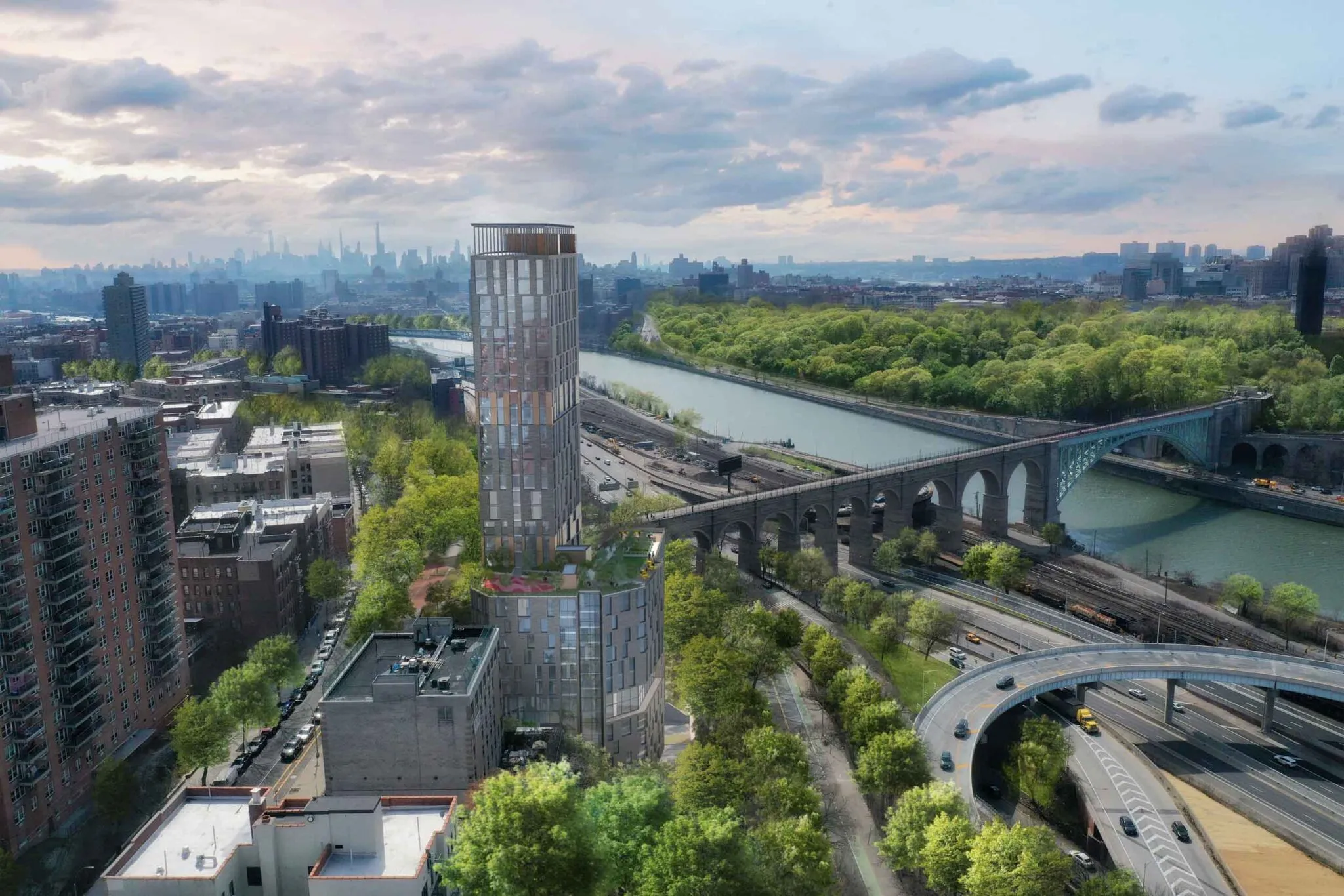
 Ushering in a new era for sustainable, affordable housing, Highbridge will soon begin construction in The Bronx as we plan to break ground on the mixed-used building in December of 2024. The project will bring more than 300 low-cost apartments to the neighborhood.
The highly anticipated building will provide modern, energy-efficient living spaces for low-income and homeless families and single adults. The high-rise will address New York City’s affordable housing crisis with a unique blend of affordable, supportive, and transitional housing units.
Totaling 400,000 square feet, the Highbridge will include:
- 125 affordable apartments (available through the NYC Housing and Preservation Development’s (HPD) NYC Housing Connect housing lottery)
- 190 supportive housing units for unhoused individuals and families
- 106 transitional housing units for families
- 1 superintendent’s unit
- 5,300 square feet of community facility space
Once complete, the building will bring a total of 316 permanent housing units to the neighborhood. According to Julia Ehrman, Director of Real Estate Development, 60% of the units will be set aside for formerly homeless families and single adults.
Supportive and Housing Units to House Families and Adults
Supportive units in Highbridge will help residents transition from existing transitional housing to stable, permanent housing. Most of the residents designated for those apartments will be referred through the NYC Department of Homeless Services.
Residents living in the permanent supportive housing units will pay subsidized rent (usually 30% of their monthly adjusted income). Typically, these clients are employed and are working toward greater self-sufficiency and financial independence.
Supportive housing occupants will have access to a case manager who can refer them to primary and mental health care, social services, vocational services, educational services, long-term housing placement, and other resources to help overcome barriers.
“Our continuum of care provides a range of services that address the social determinants of health,” said Ehrman. “Housing is a key to improving people’s lives and their health.”
Ehrman added that, once construction is complete, there are also plans to relocate residents from one of the agency’s nearby family residences.
Bronx residents will also have the opportunity to live in the affordable units set aside within the building. Through outreach, the property manager will inform community members of their availability. Eligible households will be able to apply for affordable housing units through the NYC HPD housing lottery.
Serene Spaces for City Living
Providing plenty of green spaces and walkways, the Highbridge will integrate a number of features typically associated with higher-priced buildings such as:
- Community facility spaces
- On-site laundry
- Rooftop outdoor recreation space
- Walking trails and extensive landscaping
- 24/7 security

The site will also have more than 100 program staff to support the permanent and transitional residents’ social services needs. They include:
- Recovery-oriented and trauma-informed case management
- Services for substance use recovery and prevention
- Primary health and behavioral healthcare support
- Recreation and wellness programming
- Employment and benefits services
- Long-term housing placement and aftercare services
Preservation of Historical Features
Formerly a monastery for Carmelite nuns, the original Highbridge building was purchased by Samaritan Daytop Village in 1982. It was then converted into a residential treatment center for men. Eventually, a proposal offered a new purpose for the site: supportive, transitional, and affordable housing.
After years of careful planning and public information sessions, Samaritan Daytop Village moved its residential program to a new location, and the old Highbridge building was demolished earlier this year.
Prior to and during demolition, the construction team ensured the preservation of the building’s original front portico and other historical design features, including select stone, wooden, and metal elements. These elements will be integrated into the final interior and landscape design. Ehrman noted that, before the building’s demolition, the team took interior and exterior photographs for an archive. Those photos will be featured in an historical display, most likely inside the building lobby, to honor the site’s storied past.
Green Design and Sustainability Produce Healthy Living Spaces
Highbridge was designed with the future in mind. The building will be fully electrified and environmentally friendly—from the kitchen appliances to the climate-controlled thermostats—to ensure a zero-to-low carbon output.

Highbridge will avoid using fossil fuels, as New York State has mandated for all new buildings by 2026. It will also incorporate a passive house design approach, which promotes low energy consumption for the heating and cooling systems. The Highbridge is anticipated to reduce energy consumption by 80%, far exceeding the standard 60%.
Overall, the award-winning green design features will reduce the building’s energy usage and carbon emissions to create healthy, energy-efficient living spaces. The team’s designs exceed the standards, ensuring the building stays up to date with sustainability standards for years to come.
Once transformed, the Highbridge will continue to serve as the gateway to the historic High Bridge. Construction is expected to last three years, with completion scheduled for June 2027, followed by a one-year period for residents to move in, with the goal of full occupancy by mid-2028.
Funding and Community Support
As of June 2024, Highbridge has received $335.4 million in financing for the redevelopment project. From pre-development to construction, Highbridge has received financial support from City, State, and private organizations on varying components of the building, including:
Residential Permanent Housing
- NYC Department of Housing Preservation & Development
- NYC Housing Development Corporation
- NYS Homeless Housing Assistance Corporation
- Richman Housing Resources
- NYS Research & Development Authority
Transitional Housing
- NYC Department of Homeless Services
- Citi Community Capital Bank
Construction Funds
- Citi Community Capital Bank
Predevelopment Loans & Grants
- Down Payment Assistance Fund
- Leviticus Fund
- Deutsche Bank
The project team includes:
Owner: Samaritan Daytop Foundation
Architect: Magnusson Architecture and Planning, PC
General Contractor: MEGA Contracting
Sustainability Consultant: Bright Power
Civil Engineer/Environmental Engineer: AKRF, Inc.
Landscape Architect: Terrain-NYC
MEP Consultant: Dagher Engineering
Expeditors: Core Consultants
Financial Consultant: The Ametrine Group (formerly Amy Larovere Consulting)
Owner Representative: ARMA Development Consultants
Attorney: Hirschen Singer & Epstein
Core Expeditors
The Future of Housing Looks Green
Highbridge represents a big step forward in Samaritan Daytop Village’s move into the affordable and supportive housing market. Through innovative design, sustainability initiatives, and a commitment to supporting vulnerable populations, the project will serve as a model for future housing developments across New York City.